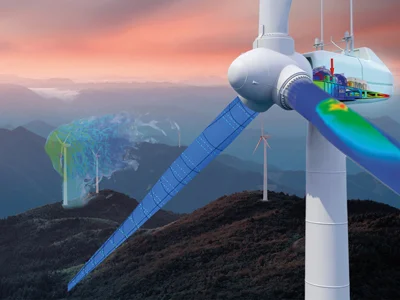
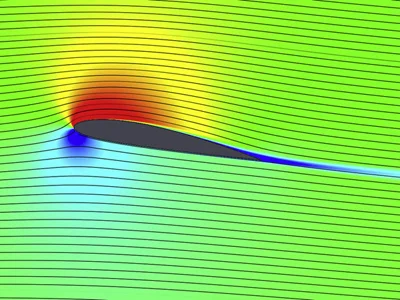
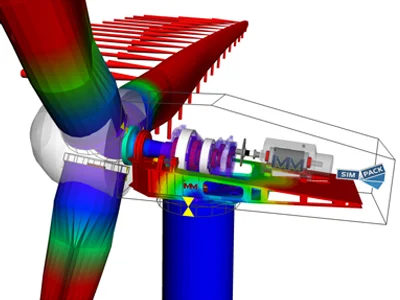
SOLIDWORKS Simulation has been widely used in the power industry to study efficiency of sub-systems involved in power generation. Combination of what-if scenarios can be studied with ease to understand system response and enhance reliability. Following functionalities have benefited the Power Sector immensely:
- Remaining Life Analysis of Static and Rotating components such as turbine parts
- Heat transfer analysis of heat exchangers, boilers, pre-heaters, headers among others.
- Fluid flow analysis in cyclones, waste-heat recovery systems, chimneys, cooling towers and environmental and pollution control sub-systems
- Efficiency estimation of pumps
- Energy flow studies in wind power applications
- Solutions to Vibration induced failure problems
- Strength and stiffness calculations for pressure vessels, structural members and tanks
- Earthquake Response (Seismic) Analysis of sub-systems
- Creep analysis and aging calculations for high-temperature applications
Advantages of SOLIDWORKS Simulation for Power Applications
- Wide range of Analysis – From components to Sub-systems to Full Systems
- Kinematic Analysis using Cosmos Motion for mechanisms such Dampers and Gear-box
- Life Estimation of rotating components – High Cycle Fatigue
- Weight reduction of Wind-mill sub-systems such as nacelle frames, hub, extenders, support structures
- Heat Transfer efficiency prediction in heat exchangers, condensers, chillers among other systems
- Rotor-dynamic calculations